 Nationwide Shipping Across NZ



Why pickling paste is so dangerous
Why we still use pickling paste, and how bad is it?
When Stainless Steel has been welded, or heat treated and a coloured/black oxide layer can be seen, there is a chromium depleted layer on the surface of the steel underneath the oxide layer which allow the stainless to rust. To restore the Stainless Steel back to it corrosion resistant state there are two way; Mechanical or Chemical, and this is why pickling paste so commonly used.


Pickling Paste
For a long time, the only way to achieve an acceptable end result on stainless steel welds was through dangerous, extensive, time-consuming processes with pickling paste; dangerous, messy and harsh to the environment.
Pickling pastes contain a combination of hydrofluoric acid and nitric acid which can cause serious injuries, it may not even be noticed until long after serious damage has been done. As the use is relatively widespread amongst stainless steel fabricators, consequence they are often overlooked by employers when conducting Health and Safety checks.
Certifications and permits are needed to handle and use pickling paste because of the serious damage it can cause. Now with the new April 2016 Health and Safety regulations this is even more critical than ever before.
Pickling paste acids
Hydrofluoric Acid HF
Hydrofluoric Acid is one of the most dangerous acids. It needs to be treated differently than even strong acids like Sulfuric.
Hydrofluoric acid differs from other acids because the fluoride ion eagerly penetrates the skin, causing destruction of deep tissue layers, including bone. And with it may not even be noticed until long after serious damage has been done even death. Burns from it is often aren”t painful to begin, may be delayed for 1-24 hours. This is also highly corrsive to the eyes, and digestive, respiratory areas.
Hydrofluoric Acid is used in industrial processes, like glass etching, pickling or metal cleaning.
Nitric Acid HNO3
Nitric acid is classified as a strong acid, ionizing almost completely in water.
Nitric acid can stain the skin yellow and burns painfully deep, and it vapors are highly corrosive to the eyes, skin, and mucous membranes. The effects with this acid can also be delayed, including permanent eye damage, hardening of the skin, and heart failure.

Sulfuric Acid H2SO4
Sulfuric acid is classified as a strong acid, ionizing almost completely in water.
Sulfuric acid is the most abundant product of the chemical industry. It is used in the refining of metals and in the manufacture of a wide variety of substances. It is used for the “pickling” of steel to retard corrosion, in the refinement of petroleum, and in the manufacture of fertilizers.
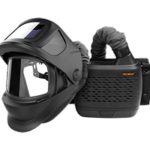
Personal protective equipment is regarded as compulsory for pickling paste
Respiratory: Gas mask with chlorine filter (grey) & dust filter P2
Hands: Acid resistant gloves
Eyes: Full-face shield, goggles
Body: Rubber acid resistant safety boots and acid resistant clothes/overalls

Electrochemical cleaning – Faster and safer way
Electrochemical cleaning (Cougartron weld cleaning systems) is deemed as a much better, faster and safer alternative to pickling as it only uses weak acids. It allows the stainless steels to achieve perfect smoothness, and also makes welds corrosion free.
Electro cleaning acid
Electro cleaning acid
Phosphoric Acid H3PO4
Phosphoric acid is classified as a weak acid since it ionizes weakly in water.
Phosphoric acid is found in soft drinks. In more concentrated solutions, it is used for rust removal and for the preparation of steel surfaces for painting.

 Available to everyone
 View stock levels & shipping times
 Access to trade accounts, & order history