 Nationwide Shipping Across NZ


Your ultimate guide to rotary burrs for metal fabrication
Rotary burrs? Tungsten carbide? Single or diamond? Shape? There’s a lot to consider when choosing the right rotary burr for the job at hand. Our guide below will teach you everything you need to know about choosing the right rotary burr for your metal fabrication…
What are rotary burrs for?
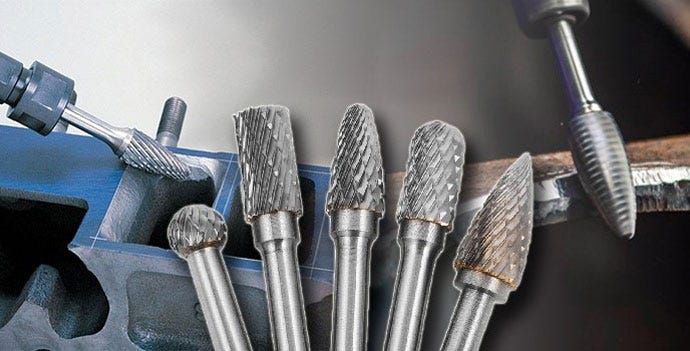
A rotary burr is a rotating tool that is used for removing material. They are designed to rotate at a very high speed which enables it to manipulate the material it is working on. When working with metal, burrs are great for deburring, shaping and enlarging holes. Tungsten carbide rotary burrs can be used on all metals including steel, stainless steel and aluminium. They are commonly used by metal fabricators and engineers for tool making, model engineering, jewelry making, welding, deburring, grinding, and sculpting.
Tungsten carbide vs HSS
Generally a metal burr is made from either Tungsten Carbide or High Strength Steel (HSS). Tungsten carbide burrs are preferred when working with metal. Due to their extreme hardness they can be used on much more demanding jobs and won’t wear out, unlike HSS. What’s more, HSS has less tolerance for heat and will start to soften under high temperatures. Tungsten carbide burrs will last longer and perform better under higher temperatures.
Why we recommend Tungsten carbide burrs?
- High stock removal
- Great for deburring, shaping, smoothing welds, enlarging holes, carving and finishing
- Last longer
- Perform at high temperatures
- Ideal for all metals
Where tungsten carbide burrs can be used on any metal, there are different cuts available to suit different metals, see below.
Types of cut
Metal burrs come in either a single/aluminium cut, or a double/diamond cut. Large single/aluminium cut carbide metal burrs have a single right cut spiral flute and are used with cast iron, steel, copper, brass, and other ferrous materials such as aluminium. Single cut burrs will provide faster stock removal with no clogging (clogging is common with aluminium), however they will not provide as smooth finish as double cut carbide burrs. Double/diamond cut have both a right and left hand cut providing a faster and finer finish. These are commonly used on steel, stainless steel and other hard metals.
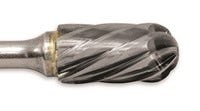
Aluminium cut
- For use on Aluminium and softer materials
- Faster stock removal with no clogging
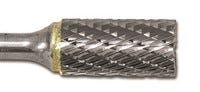
Double cut
- Most commonly used on Stainless Steel and Steel
- Right and left hand cut giving you fast and finer finish
Shapes
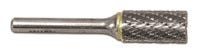
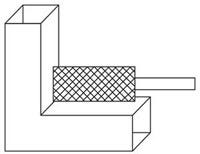
Cylindrical end cut SB
• Surface milling, right angle corners
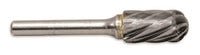
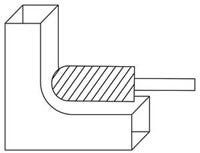
Cylindrical ball nose SC
• Machining contours and circular arcs
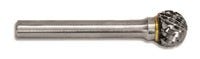
Ball shape SD
• Rounded end milling, preparing for welding
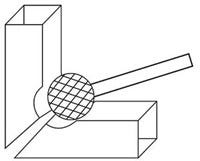
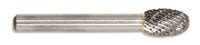
Oval shape SE
• Rounded contouring and end milling
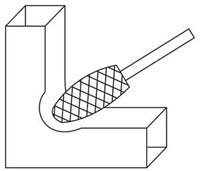
Tree shape round nose SF
• Multi-angle contouring, rounded and narrow
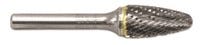
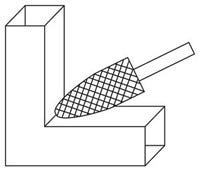
Cone shape round nose SL
• Enlarging holes, rounded edges and narrow place
Related Posts
Log back in
Don’t have an account yet?
Register free here


Benefits of a Euromarc account
 Available to everyone
 View stock levels & shipping times
 Access to trade accounts, & order history
 Register for our helpful stock systems